
Sofa Symphony
My Role
Creative Strategist
The pitch
Project introduction
This was a pitch presentation for Sofa Symphony, a South African online brand that specialises in stylish, custom-made sofas, lounge suites and home furniture. The business wants to make quality, personalised furniture more accessible and affordable, with a seamless experience from enquiry to delivery.
The problem
Trust was the challenge
Sofa Symphony had experienced incidents where customers ran into scams, especially on TikTok. That made trust the central challenge. If we could give potential customers confidence that the brand was legitimate, we would also help it stand out in a crowded furniture market.
So our strategy was to build a system of trust, rather than simply increase awareness.
The whys
Starting with pain points
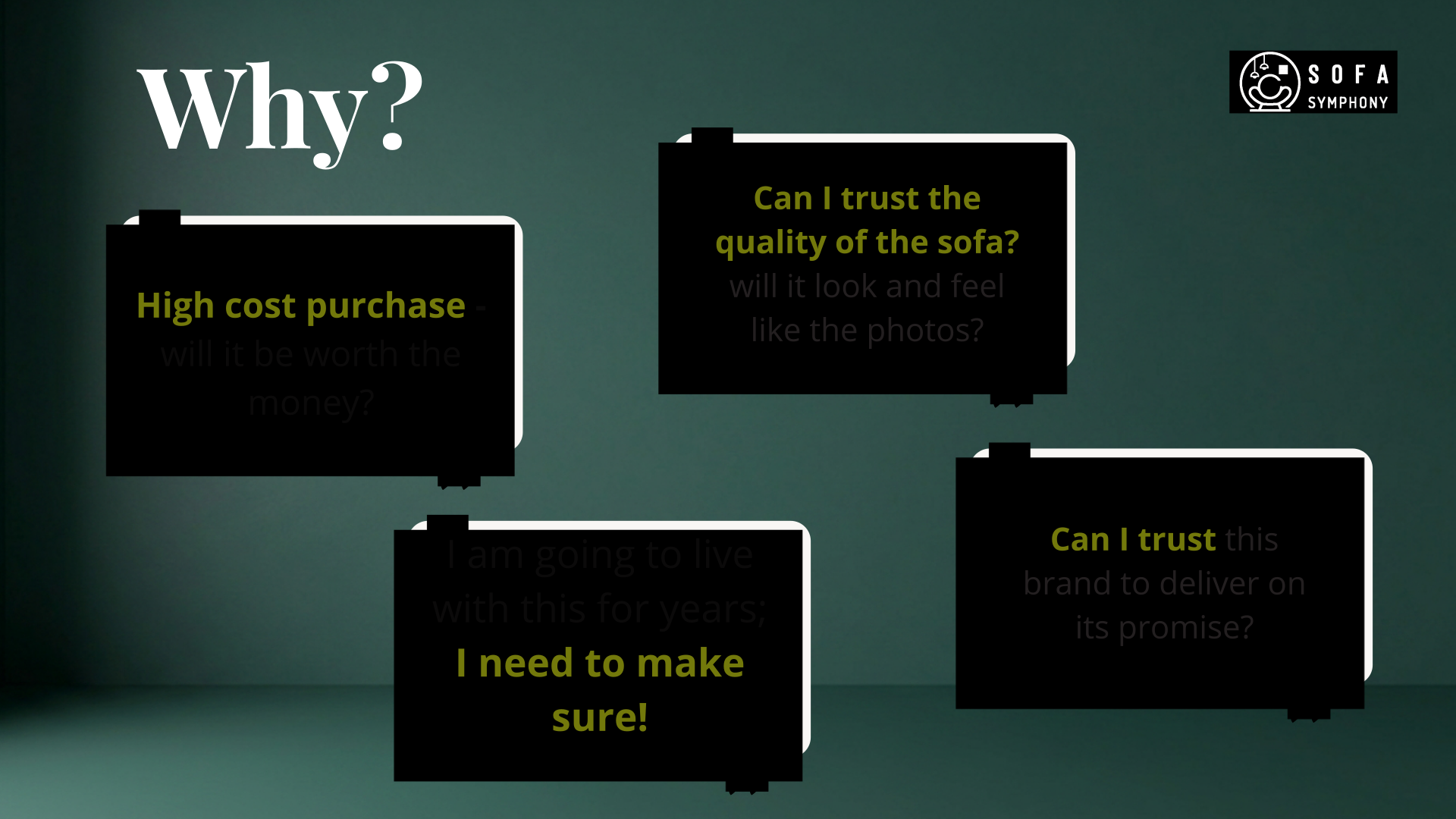
Our starting point was the pain points of potential customers. Before jumping to ideas, we asked the central questions behind their hesitation. The central whys.
Existing buyer
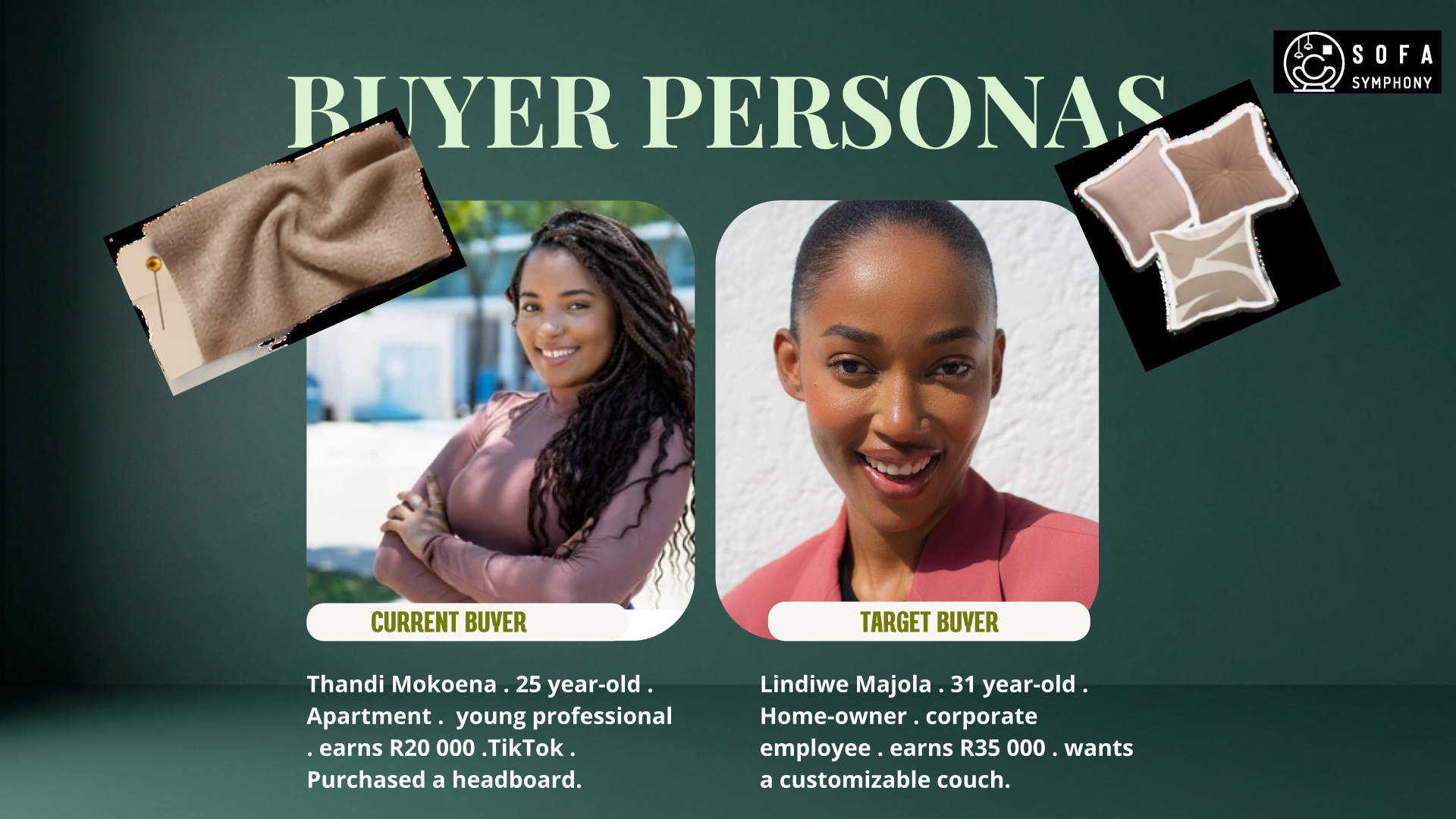
Meet Thandi Mokoena
Our research identified the current buyer persona, who we named Thandi Mokoena. She represents the majority of Sofa Symphony’s customer base. Most of these customers came from the brand’s large TikTok following, and they usually buy a headboard, which retails between R2 000 and R8 000. That makes her the more affordable end of the range.
Target buyer
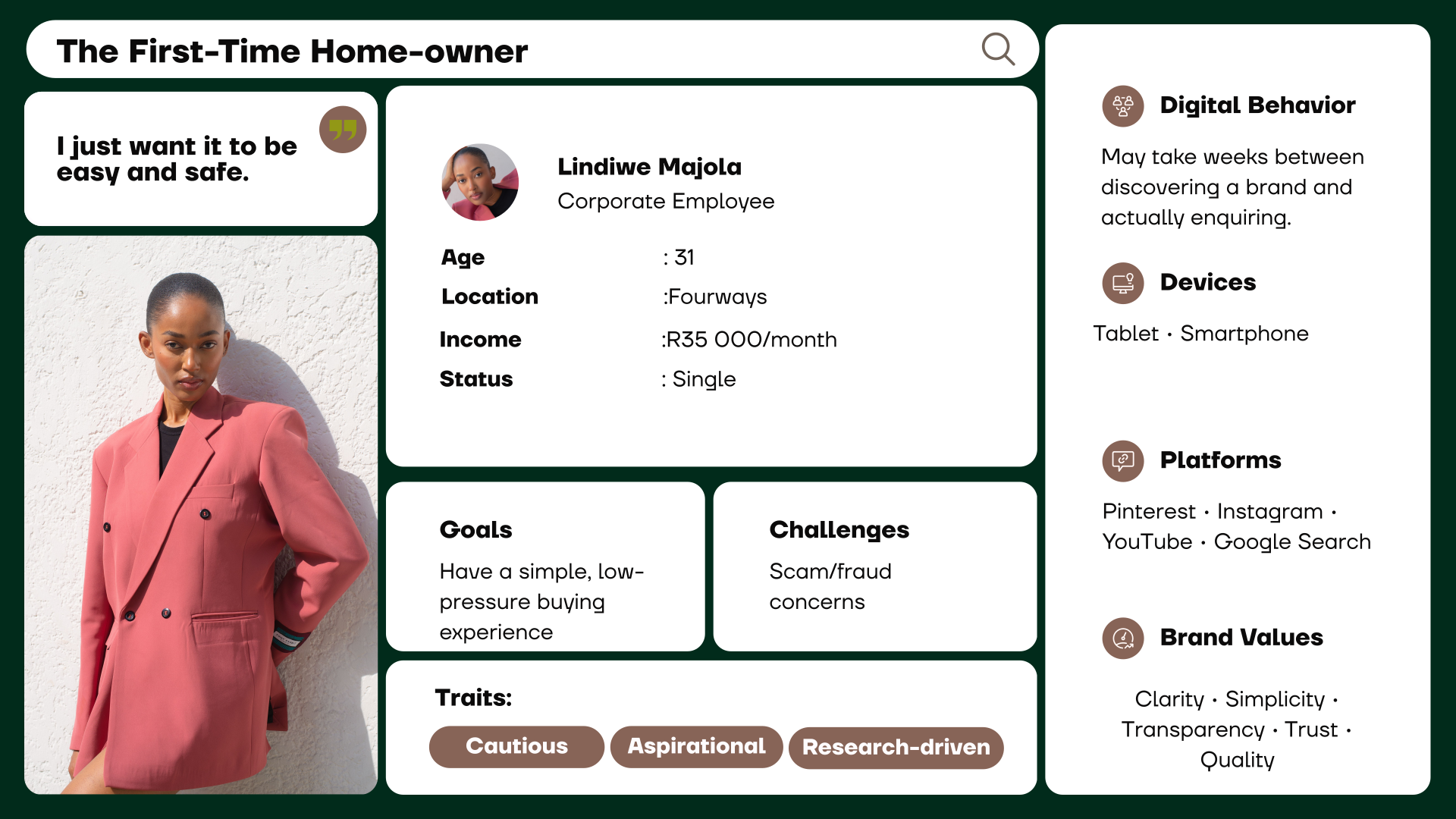
Who we wanted to reach
We wanted the campaign to focus on the target buyer instead. She is the person more likely to buy what Sofa Symphony wants to be known for: sofas.
The campaign idea
Touchpoints of Trust
The campaign was built around Touchpoints of Trust: building trust at every stage of the customer journey, from awareness through to conversion. That meant looking at the whole digital ecosystem instead of treating social media, search and the website as separate channels.
We strengthened Sofa Symphony’s social presence so that when people are looking for inspiration or just browsing, the brand looks credible. We made sure it shows up when someone actively searches for a custom couch or sofa, whether on Google or in ChatGPT. And when they are ready to convert, the website becomes a trusted hub.
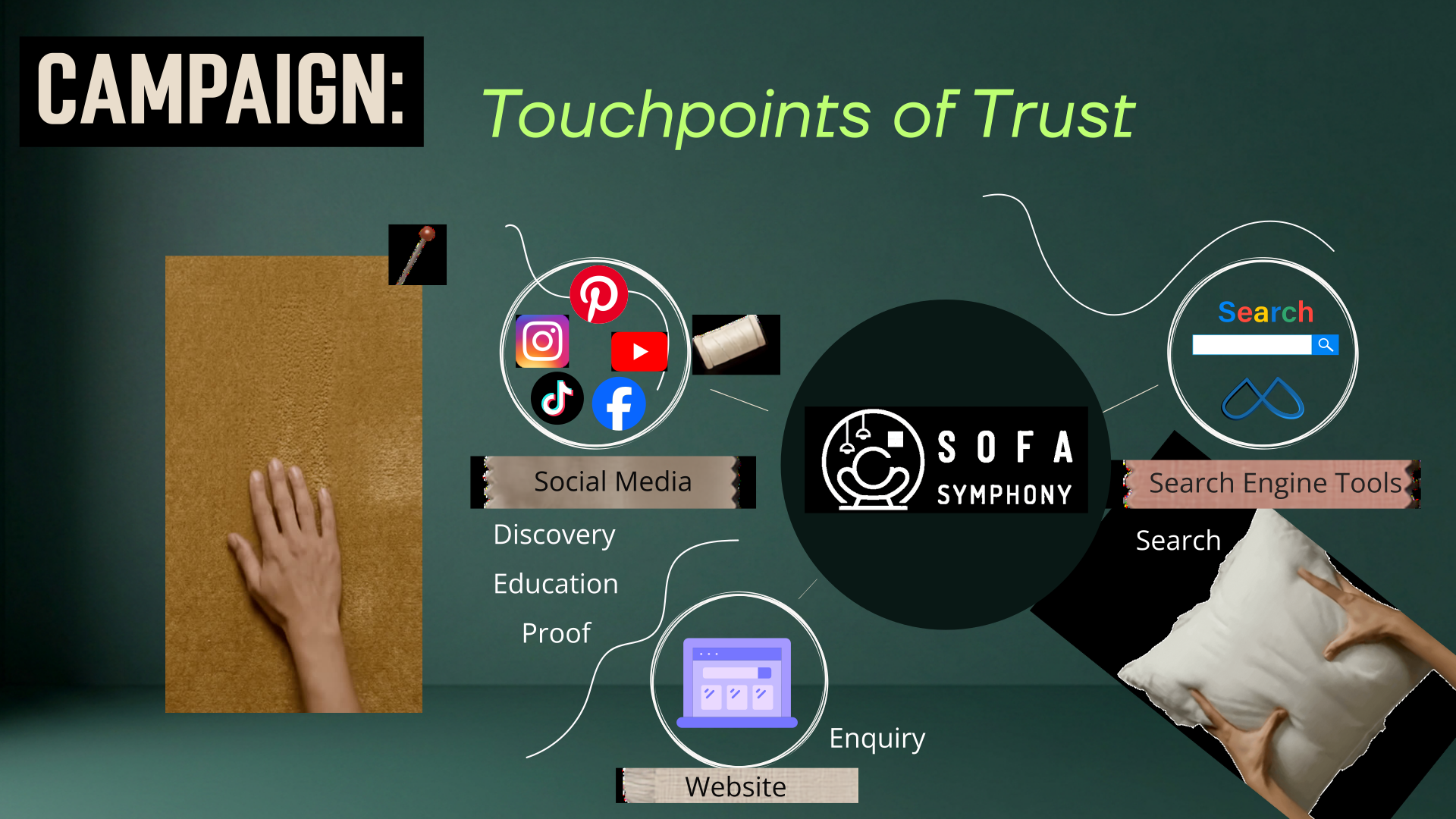
Campaign ideas across the customer journey
Four ideas that move someone from inspiration and awareness, through consideration and trust, to conversion.
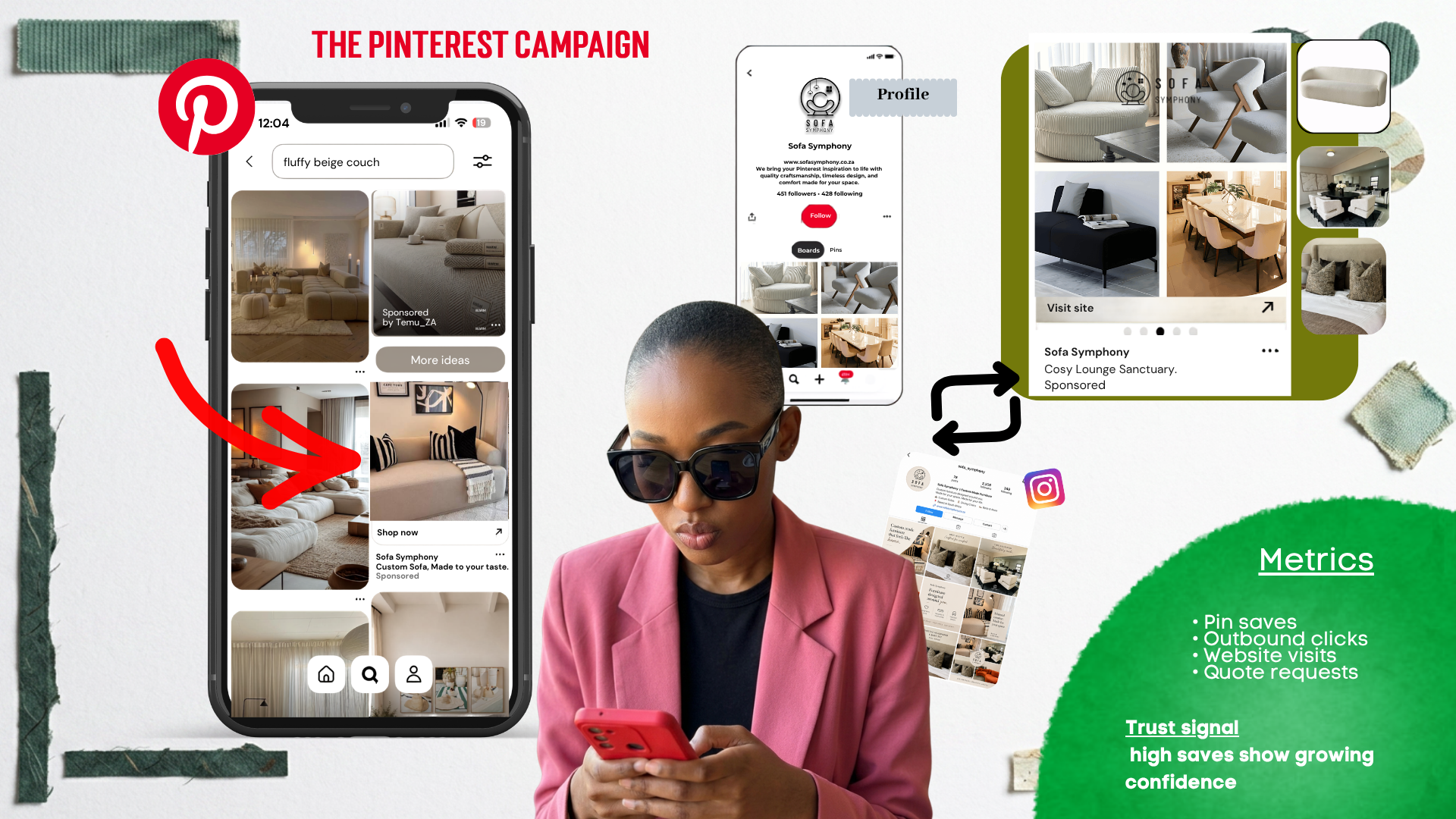
Inspiration
Pinterest and Instagram
Based on what the client told us, people looking for a new couch usually start by looking for inspiration and imagining their space. Pinterest is where that begins, so we proposed aspirational content that lets people picture Sofa Symphony furniture in their own homes.
The same content can be repurposed on Instagram, where competitors are already active.
Aesthetics are the hook. Trust is the anchor.
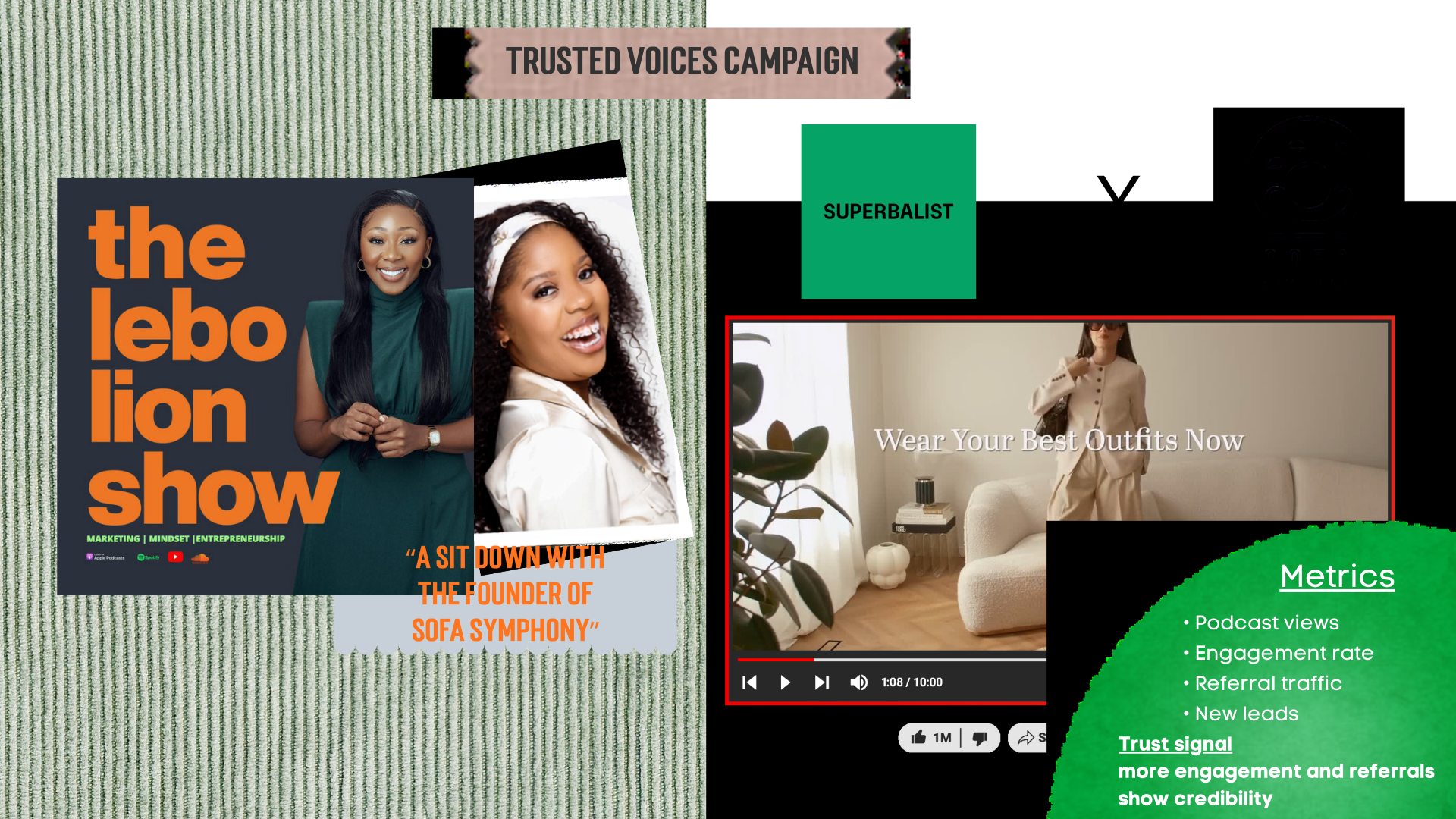
Trust
Trusted voices
To stand out, we looked at trusted voices and meaningful partnerships. One idea was for Lelo, the owner of Sofa Symphony, to appear on a trusted podcast such as The Lebo Lion Show. Instead of advertising sofas, she would tell the story of the business and her journey as an entrepreneur, so people connect with the person behind the brand.
The second idea was a partnership with Superbalist. Instead of a traditional influencer campaign, an influencer would showcase Superbalist clothing while a Sofa Symphony couch sits naturally in the space. Being associated with an established and trusted e-commerce brand reinforces credibility.
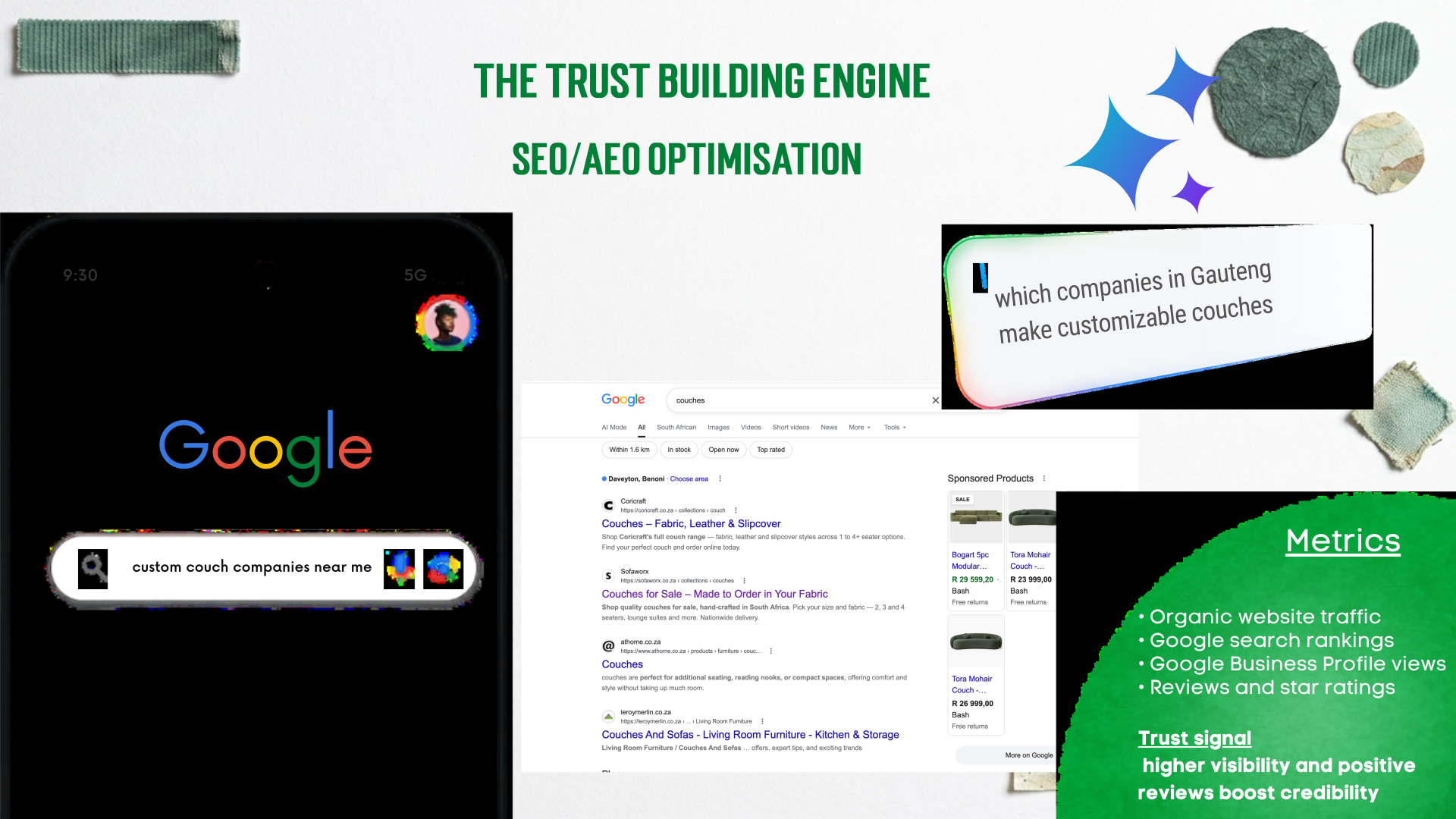
Search
SEO and AEO
Sofa Symphony had very limited visibility when people searched for terms like sofas and couches. That gave competitors the advantage, because they were easier to find.
We proposed strengthening SEO and AEO with useful content built around the questions people are already asking, so the brand builds authority and shows up across search and answer driven platforms.
Conversion
The Trust Hub
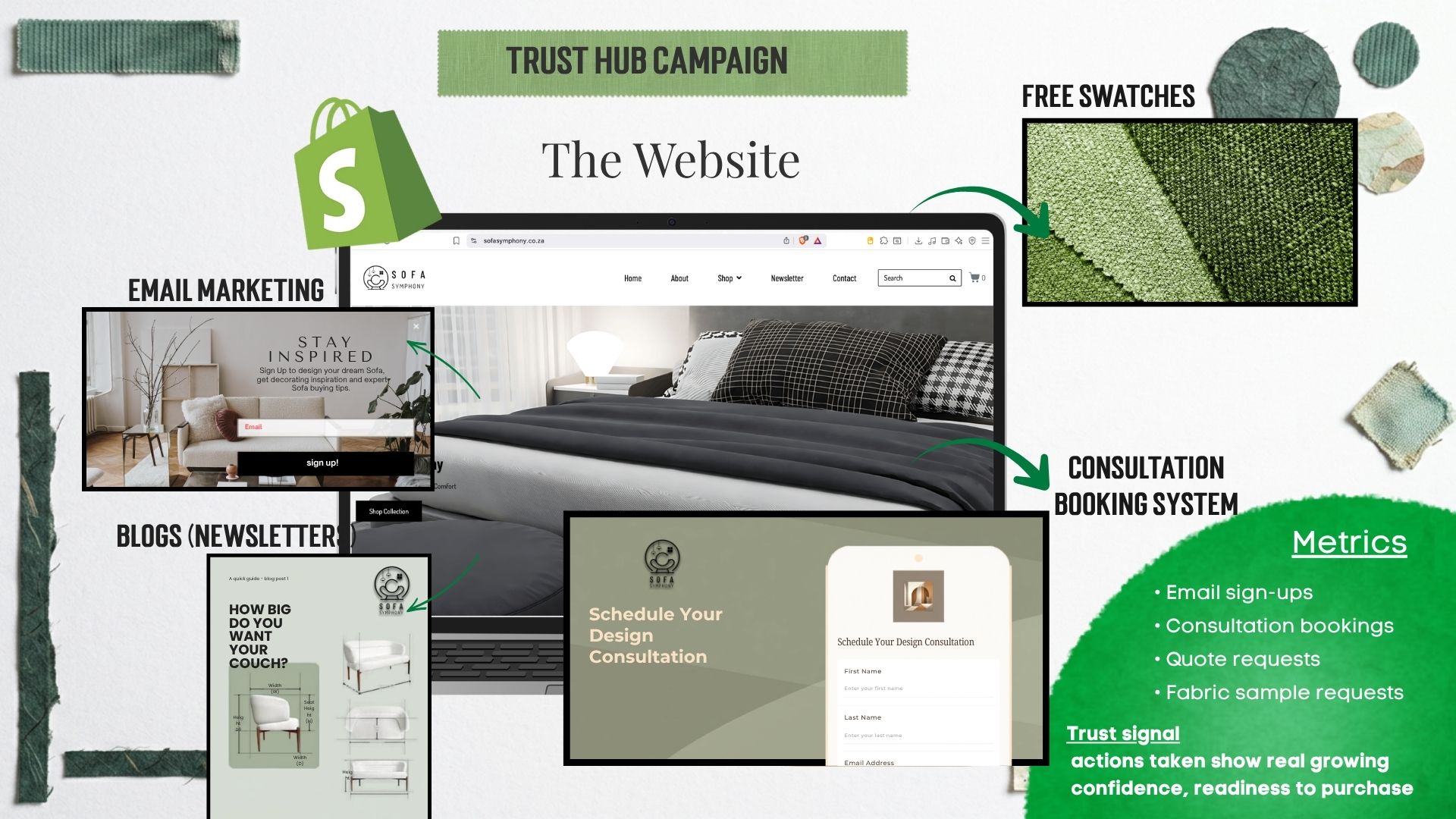
Once someone is seriously considering a purchase, the website becomes one of the most important trust touchpoints. The existing site was weak and did not offer enough reassurance for a significant furniture purchase, so we positioned it as the Trust Hub. The idea was to improve the experience and give people more reasons to trust and engage, including:
- Free fabric samples
- Email sign ups
- Educational blogs and newsletters
- Design consultation bookings
- Helpful content on furniture care, colour choices and long term decisions
- Ways to identify and nurture customers who are closer to buying
The website stops being a place to view products and becomes a central trust building and conversion tool.
Reflection
Process
I started by defining the business problem and connecting it to the business goals and marketing objectives. Then I researched the audience and the existing customer base, which showed that trust was the main barrier to conversion. That led to our central principle, aesthetics are the hook and trust is the anchor, and a campaign objective focused on qualified sofa enquiries.
From there we mapped the customer journey and channels, identified gaps like a weak website and limited search visibility, and developed concepts for each stage of the funnel.
My Contribution
My primary contribution was research and strategic development. I helped investigate the audience, identify insights and translate those findings into campaign and digital strategy.
I also contributed to the campaign ideas and strategic direction, and took ownership of the visual design of the final presentation, so the strategic thinking was communicated through a cohesive and compelling visual identity.
Challenges
One of the biggest challenges was working within a R20,000 budget, which significantly limited what could realistically be executed.
We also had a two week timeframe, so every stage of the strategic process had to move quickly. There was limited time to fully develop the creative and content strategy, particularly the specific content we would produce and how it would translate across channels.
Another challenge was limited access to proprietary data. We did not have the company’s internal customer or performance data, so our research relied largely on publicly available information, including search results, social media platforms and the brand’s existing digital presence.
How I Overcame Them
Rather than allowing limitations to dictate the quality of the work, I approached them as constraints to work creatively within.
I am persistent when solving problems. When information, time or resources are limited, I look for another route instead of treating the limitation as a dead end. This meant making strategic decisions quickly, prioritising the information that would have the greatest impact, and finding ways to build a credible strategy from the resources available.
Working under pressure also strengthened my ability to make decisions without perfect information, which is an important skill in creative and strategic work.
What I Learned
This project strengthened my understanding of how business objectives, audience insights, customer behaviour and creative strategy need to work together.
I learned that good strategy is not simply about generating ideas. It is about understanding why an idea should exist, who it is for, what problem it solves and how it contributes to a measurable business outcome.
I also learned the importance of balancing aspiration with credibility. In a visually driven category like furniture, beautiful creative can attract attention, but it needs to be supported by signals of trust if the goal is conversion.
Most importantly, the project reinforced my ability to work strategically under constraints and make informed decisions even when time, budget and information are limited.
Outcome
The final strategy received strong positive feedback, particularly on the presentation’s visual identity, the campaign ideas and the strategic thinking behind the approach.
The client responded positively to the idea that the business needed a more holistic digital approach to build trust, reach its intended target audience and move beyond relying mainly on its existing customer base.
The campaign was considered as a potential strategic direction for the brand.
What I Would Do Differently
Given more time and resources, I would take the strategy further into creative execution.
I would develop example content across the proposed channels to show exactly what the strategy would look like in practice, including the visual direction, content formats, messaging and the strategic reasoning behind each piece.
This would create an even stronger connection between the strategic recommendation and its execution, so the client could see not only what we recommend, but what it could look like and why it would work.